
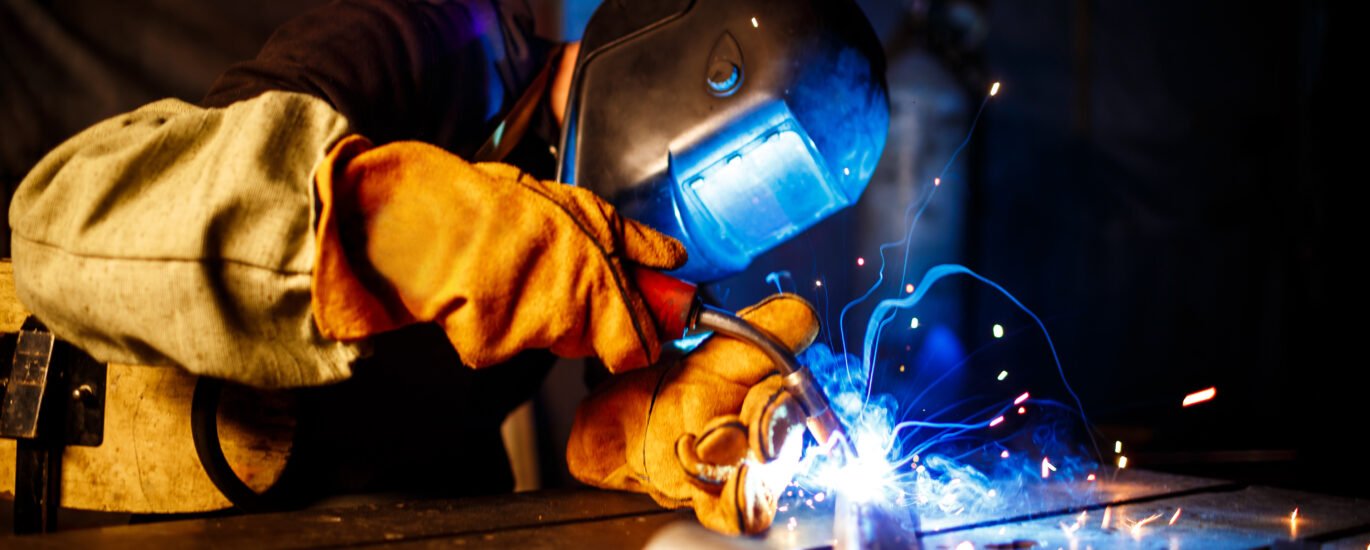
Inside Our Short-Term Welding & Aluminium Fitting Course
Behind every strong structure is a combination of skilled hands, technical knowledge and attention to detail.
Welding and aluminium fitting are practical trades that require more than simply knowing how to operate a machine. From accurate measurements and material preparation to joining, finishing and quality checks, every step can influence the final result.
That is why our Short-Term Welding & Aluminium Fitting Course is designed around practical learning, helping participants develop the skills and confidence needed to work with metal and aluminium in real-world applications.
Learning Starts in the Workshop
The best way to understand welding and aluminium fitting is to work with the materials directly.
Our training combines technical instruction with hands-on workshop activities. Participants get the opportunity to work with tools, equipment and materials while learning how different processes affect the final product.
The objective is not simply to understand the theory, but to learn how to apply it accurately.
Building the Fundamentals of Welding
Welding requires precision, control and consistency.
During the course, participants are introduced to essential welding principles, including workplace preparation, material preparation, joint preparation and appropriate welding techniques.
They also learn the importance of controlling heat, maintaining proper positioning and producing clean, consistent welds.
These fundamentals form the foundation for producing reliable fabricated components.
Understanding Aluminium Fitting
Working with aluminium requires a different approach from working with traditional steel.
Aluminium is lightweight, corrosion-resistant and widely used in construction, architectural applications, doors, windows and other fabricated products. However, its material properties also require appropriate preparation, handling and fabrication techniques.
The course introduces participants to practical aluminium fitting processes, including:
- Measuring and marking
- Cutting and preparation
- Accurate alignment
- Assembly and fitting
- Joining techniques
- Finishing and surface preparation
- Quality inspection
The focus is on developing accuracy at every stage of the fabrication process.
Precision Starts with Measurement
A quality finished product begins long before welding or assembly.
Incorrect measurements can lead to poor alignment, material waste and unnecessary rework. Participants therefore learn the importance of accurate measuring, marking and fitting before fabrication begins.
This attention to detail is particularly important when producing components that must fit together precisely on a construction site or during installation.
Safety Is Part of the Skill
Welding and metal fabrication involve heat, electrical equipment, sharp materials, tools and other workplace hazards.
For that reason, safety is integrated into the learning process.
Participants are introduced to proper workshop organisation, equipment handling and the use of appropriate personal protective equipment. They also learn why a clean, organised workspace is essential for both safety and productivity.
Professional workmanship starts with professional working practices.
From Fabrication to Finishing
Fabrication does not end when the welding or fitting is complete.
Grinding, cleaning, finishing and inspection are important parts of producing a professional final product. Participants learn to examine their work, identify visible imperfections and carry out appropriate finishing procedures.
This helps develop an important mindset: quality should be checked throughout the process, not only at the end.
Learning Through Practical Projects
Rather than relying entirely on classroom theory, the course gives participants opportunities to apply what they learn through practical exercises.
Working on actual fabrication tasks helps learners understand how individual skills connect together—from measurement and cutting to fitting, joining and finishing.
This practical approach can be particularly valuable for beginners, artisans and individuals looking to strengthen existing technical skills.
Who Can Benefit from the Course?
The course can be useful for people who want to develop or strengthen practical skills in welding and aluminium fabrication, including:
- Beginners looking to enter the trade
- Welders seeking to improve their skills
- Aluminium fabricators
- Construction workers
- Technicians and artisans
- Individuals interested in practical vocational skills
- Small business owners working in fabrication and installation
The aim is to provide practical knowledge that participants can continue developing through experience and further training.
Skills That Go Beyond the Workshop
Technical training is not only about operating tools.
Participants also develop habits that are valuable in professional fabrication environments: accuracy, planning, equipment care, safety awareness, problem-solving and attention to detail.
These qualities can make a significant difference when working on real projects where specifications, deadlines and quality expectations must be met.
Preparing the Next Generation of Skilled Fabricators
The demand for practical technical skills continues to create opportunities across construction, manufacturing, maintenance and fabrication.
Training programmes that combine technical knowledge with hands-on practice can help learners build a stronger foundation for employment, further training or entrepreneurship. Similar vocational programmes in the region place strong emphasis on practical skills, safety and workshop experience.
Our Short-Term Welding & Aluminium Fitting Course is built around that same principle: learn the fundamentals, practise the process and develop the confidence to produce quality work.
Ready to Build Your Skills?
Whether you are starting from the beginning or looking to strengthen your existing abilities, practical training can be the next step towards becoming a more capable and confident fabricator.
Learn the skills. Master the process. Build with confidence.